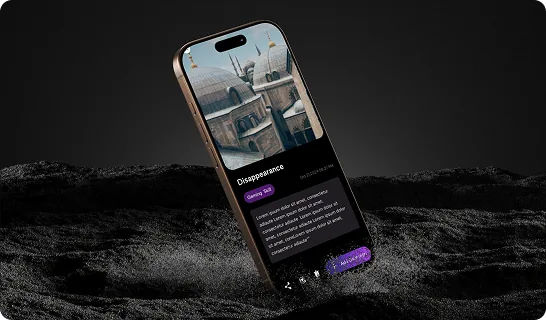
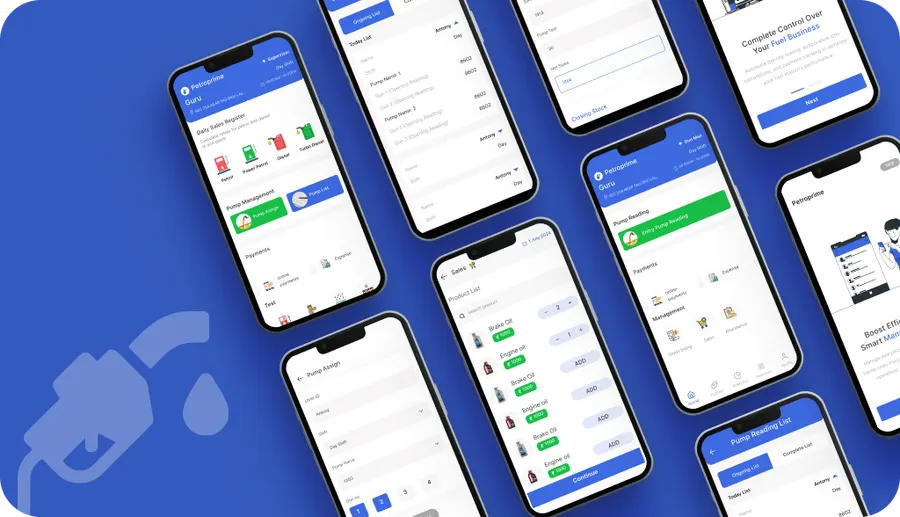
SR Agency fuel station app
A fuel pump management app that tracks fuel sales, inventory, pricing and daily operations in real time for the station's own way of working.
Read the SR Agency fuel station app case study
Home
About Us
Services
Ready-to-Launch Apps
Brand it. Launch it. Own it.
Video Dating App
Like Dostt — swipe, video & chat
Service Booking App
Like Urban Company — on-demand services
Cab Booking App
Like Ola, Uber & Rapido — ride-hailing
Vehicle Booking App
Like Porter — goods & logistics
Rice Mundy Order Management
Orders, stock & GST billing for mills
Auditing Management System
Digital checklists, NC tracking & reports
Delivery Management App
Live tracking, routes & digital POD
Industries
Portfolio
Contact

services
Made to Scale Our Software development services are built to evolve your business idea into a successful growth story.
When a ready-made app forces your team to change how it works, a custom build does the opposite. We design and develop Android and iOS apps that follow your process, your roles and your records, and connect to the software you already use.
Your rules
Screens and approvals taken from how your team works today
Android + iOS
Built in React Native, native modules where a feature needs them
APIs
Accounting, ERP, payment, maps and messaging connected by API
Yours
Source code, store accounts and data handed over to you
Who it is for
Most Coimbatore businesses that ask us for a custom mobile app have already tried something else: a white-label clone, a no-code builder, a generic field app or a mix of spreadsheets and WhatsApp groups. Those tools work until the business needs one rule, one approval step or one report that the template cannot handle.
A custom app is designed from your operations outward. A pump and motor dealer might need dealer-tier stock visibility and warranty registration in the same app. A textile mill might want shift supervisors, quality checkers and the dispatch clerk to see different screens of one production record. A hospital or clinic group might need staff task assignment that respects its own departments and escalation order. None of those are features you can switch on in a template.
Custom does not mean starting from a blank page on every screen. Login, notifications, payments and maps follow proven patterns we have shipped before. The custom part is the logic that makes your business different: who can do what, what gets recorded, which numbers the owner sees at the end of the day and which existing systems the app must talk to.
Itboomi is a dedicated mobile app development company with its office in Tiruppur, serving Coimbatore. Building only mobile apps means our designers and developers think about small screens, patchy networks and busy hands from the first sketch. For an overview of everything we build, visit the homepage of our mobile app development company in Coimbatore.
Signs you need custom
If two or more of these describe your business, a template will usually cost you more effort than it saves.
The way you quote, approve, produce or deliver is why customers choose you, and a template would flatten it.
Sales, supervisors, accounts and owners each need their own view and permissions on the same order or job.
Tally, Zoho, an ERP or a legacy database must stay, so the app has to read from and write to it.
Field staff, drivers or floor teams need offline entry, photos, GPS and signatures on their own phones.
Customer, patient or financial records should live in your own systems, not on a shared template platform.
Staff or customers who prefer Tamil screens, voice-friendly inputs and simple flows rather than English menus.
Build options compared
There are three honest ways to get an app, and each suits a different situation. Knowing which one you need saves months.
Ready-made software and no-code builders are the fastest start. They fit when your process is standard, the number of users is small and you are comfortable with the vendor owning the platform. The trade-off is that you adapt to the product, and moving away later can mean rebuilding your data elsewhere.
White-label clones, such as a generic taxi, grocery or delivery script, give you a branded app on someone else's code. They suit a quick market test, but the code is often shared across many buyers, hard to change safely and not truly yours. Security fixes and store policy updates depend on the original seller.
Custom development takes longer to plan, and it is the route where the app is shaped entirely around your business and handed over completely. You decide the features, the data stays in systems you control, and you can extend the app in any direction later. If you are not sure yet, our MVP app development approach starts with the smallest custom release that proves the idea, and the startup app development page explains how founders use it.
What custom covers
These are the parts of a custom build we plan with you before development starts, so nothing important is left to assumption.
We start from the forms, registers, invoices and chat messages your team uses now. Field names, order of entry and approval steps come from those, so staff recognise the app on the first day.
Each user type sees only the screens and actions it needs. Discounts above a limit, refunds or stock adjustments can route to a manager for approval inside the app instead of a phone call.
Orders can post to Tally or Zoho, stock can come from your ERP, payments can run through a gateway such as Razorpay, and updates can go out over SMS or the WhatsApp Business platform.
Products, users, prices, regions and content are edited from a web admin panel, so routine changes do not need a developer or a new store release.
For mills, warehouses, sites and rural routes, entries save on the phone and sync when the network returns, with clear markers for anything not yet uploaded.
Daily summaries, pending approvals and exceptions are shown on a dashboard or pushed as a notification, built around the three or four numbers you check every evening.
Related work
Each of these was built around one organisation's own process rather than a template. They show the kind of workflow logic a custom app carries.
Browse the full portfolio for more case studies. If your idea is closer to a known app type, our pages on e-commerce, healthcare, grocery and food delivery app development go deeper into those models.
A fuel pump management app that tracks fuel sales, inventory, pricing and daily operations in real time for the station's own way of working.
Read the SR Agency fuel station app case study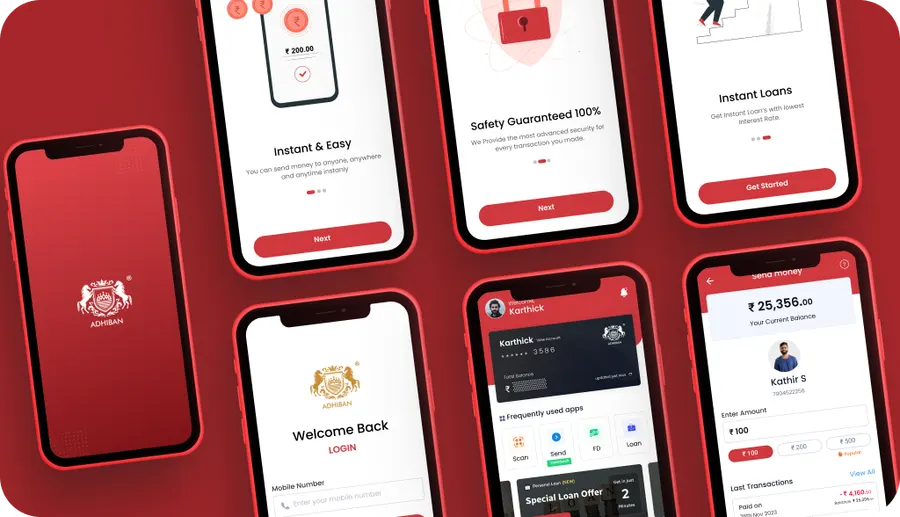
A secure internal banking app on Android and iOS for employee payments, loans and fixed deposits, following the organisation's own rules.
Read the Adhiban internal banking app case study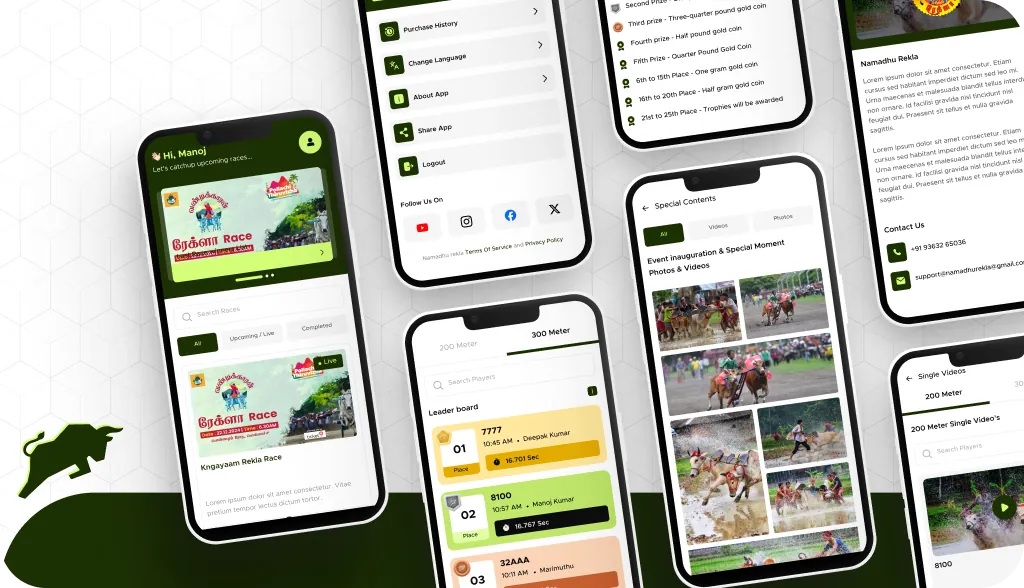
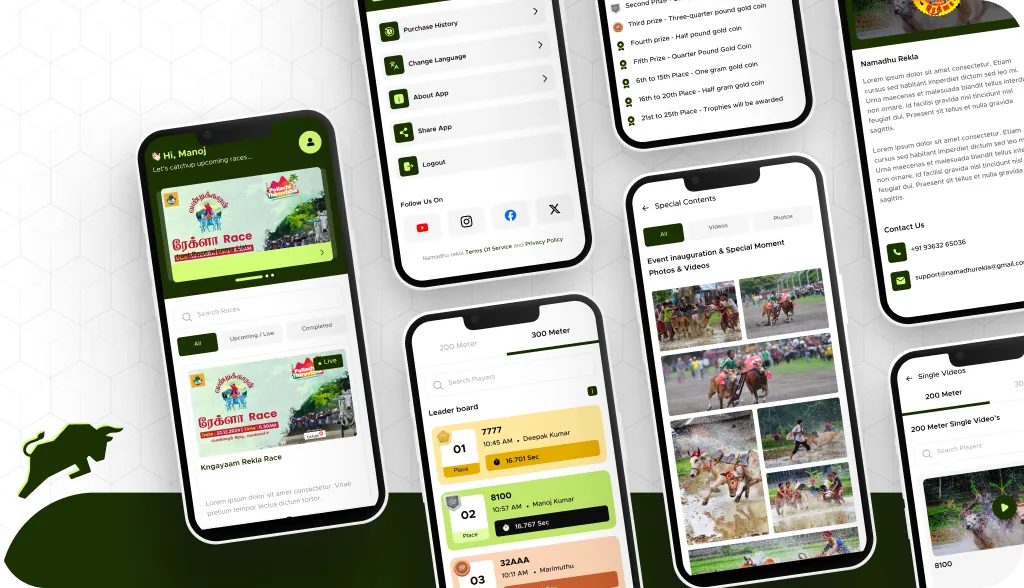
A React Native app for streaming traditional Rekla (bullock cart) races, built around one community's own sport rather than a template.
See it in our portfolio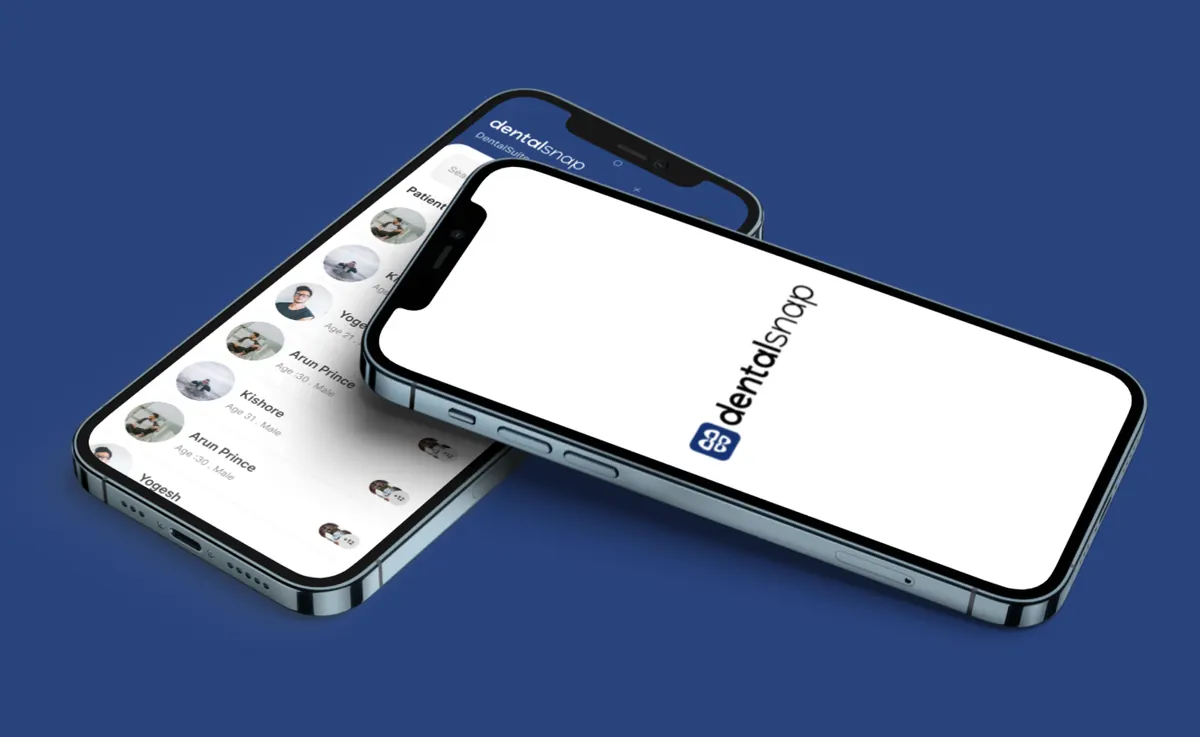
An Android app for dental clinics to manage patient records, scans and daily clinic operations digitally.
Read the Dental Snap clinic app case studyHow we work
A custom build is only as good as the understanding behind it, so the first weeks are spent on your process, not on code.
We sit with owners, supervisors and a few end users, in person or on calls, to map how work moves today and where it breaks.
Screens, roles, integrations and reports for the first release are listed in plain language, along with what is deliberately left for later. Scope and commercial terms are agreed in writing.
Your team taps through the designs on a phone and corrects the flow while changes are still cheap to make.
Development runs in short sprints. Each one ends with a test build installed on your staff's own phones, and their feedback shapes the next sprint.
We publish to Google Play and the App Store under your accounts, hand over the source code and documentation, and stay on for fixes, updates and new features.
Technology
One codebase keeps Android and iPhone users on the same features and makes later changes faster.
Most custom apps we build use React Native app development, which shares one codebase between Android and iOS. Where a feature needs deeper device access, such as Bluetooth printers, barcode scanners, biometric devices or background location, we write native modules for it. Platform-specific detail is on our Android app development and iOS app development pages. If you are comparing teams, our guide on how to choose a mobile app development company in Coimbatore lists the questions to ask, and hire app developers in Coimbatore covers dedicated developer arrangements.
It is an app designed and coded for one business's own workflow, roles and data, rather than a ready-made product or white-label script that many businesses share. You decide the features and own the result.
Yes. Itboomi is a dedicated mobile app development company with its office in Tiruppur, serving Coimbatore, and we build custom Android and iOS apps for manufacturers, traders, clinics, service companies and startups.
Not always. A white-label app can suit a quick market test with a standard process. A custom app is the better choice when your workflow, integrations or data ownership matter, or when you plan to grow the app over years.
Yes, where the software offers an API or a supported export. We review your existing systems during discovery and plan how orders, stock, customers or invoices move between them and the app.
Yes. The app is published under your Google Play and App Store accounts, and the source code, documentation and data are handed over to you.
They depend on the roles, screens, integrations and admin features you need. We agree a fixed scope and price in writing after a discovery call, which you can start from our contact page.
Contact us
We Ignite your Business
with our Love
Talk to Itboomi, an app development company in Coimbatore and the Kongu region, focused on Android and iOS.

Think. Design. Develop.Launch. Scale.
Subscribe our News letter


itboomi innovations, 8/1162, Sakthi Complex,First Floor, Pooluvapatti Pirivu, P.N Road, Tiruppur,Tamil Nadu 641602